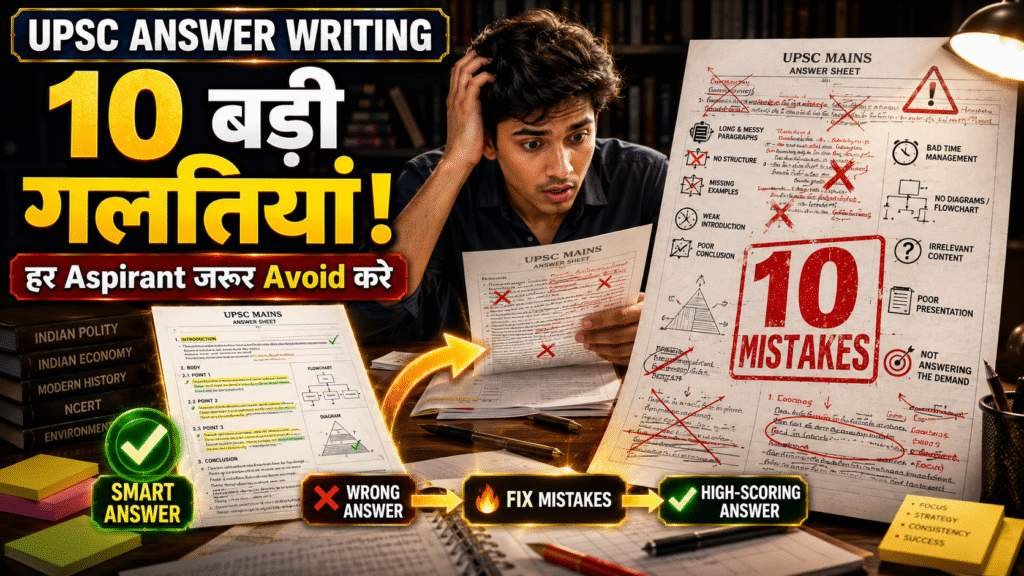
UPSC Mains में केवल Knowledge होना काफी नहीं है। कई Aspirants को Topic अच्छी तरह आता है, लेकिन फिर भी Marks कम आते हैं क्योंकि उनका Answer Writing Approach सही नहीं होता।
एक अच्छा UPSC Answer केवल जानकारी का collection नहीं होता। उसमें Question की Demand, Structure, Analysis, Examples, Presentation और Time Management का सही संतुलन होना चाहिए।
आइए जानते हैं UPSC Answer Writing की 10 बड़ी गलतियां और उन्हें कैसे सुधारें।
UPSC Answer Writing की 10 बड़ी गलतियां……..
1. Question की Demand को सही से न समझना
यह सबसे बड़ी गलती है। कई Students Topic देखकर जो कुछ जानते हैं, वह सब लिखना शुरू कर देते हैं।
लेकिन UPSC का Question क्या मांग रहा है, Answer Writing यह समझना जरूरी है।
जैसे:
- Discuss → विषय के विभिन्न पहलुओं पर चर्चा करें।
- Analyze → कारणों और प्रभावों का विश्लेषण करें।
- Critically Examine → सकारात्मक और नकारात्मक दोनों पक्ष देखें।
- Evaluate → तथ्यों के आधार पर मूल्यांकन करें।
- Comment → तर्कसंगत राय और विश्लेषण दें।
Solution..
Question के Directive Word और Core Demand को पहले पहचानें।
2. Introduction बहुत लंबा लिखना
कुछ Aspirants 150 शब्द के Answer में 50–60 शब्द केवल Introduction में लिख देते हैं।
इससे Body के लिए कम Space और Time बचता है।
Better Strategy..
Introduction लगभग 10–15% Answer का रखें।
आप शुरुआत कर सकते हैं:
- Definition से
- Current Context से
- Constitutional Provision से
- Data या Report से
- Historical Background से
Introduction का काम केवल Answer का Context देना है, पूरा Answer वहीं नहीं लिखना।
3. केवल Theory लिखना, Examples न देना
अगर आपका पूरा Answer केवल Definitions और Theoretical Statements से भरा है, तो वह Generic लग सकता है।
उदाहरण, Case Studies, Government Initiatives और Current Affairs Answer को ज्यादा relevant बनाते हैं।
Formula…
Point → Explanation → Example → Analysis
लेकिन हर Point के बाद Example डालने की जरूरत नहीं है। Answer Writing केवल Relevant Examples का इस्तेमाल करें।
4. Question के सभी Dimensions को Cover न करना
UPSC का Question अक्सर Multi-Dimensional होता है।
उदाहरण के लिए किसी विषय को आप इन Dimensions से देख सकते हैं:
- Social
- Economic
- Political
- Environmental
- Ethical
- Technological
- Administrative
लेकिन ध्यान रखें—हर Answer में सभी Dimensions को जबरदस्ती नहीं जोड़ना है।
Solution…
लिखने से पहले 30–60 सेकंड में Rough Structure सोचें।
5. बहुत लंबा Paragraph लिखना
पूरा Answer एक बड़े Paragraph में लिखने से Examiner के लिए Points पहचानना मुश्किल हो सकता है।
Better Presentation…
- छोटे Paragraphs
- Subheadings
- Bullet Points
- Keywords Underline
- जहां जरूरी हो वहां Flowchart या Diagram
का उपयोग करें।
लेकिन Presentation के चक्कर में Content को कमजोर न करें।
6. Data, Facts और Examples का Overuse
कुछ Students Answer को इतना Data-heavy बना देते हैं कि Analysis कम हो जाता है।
याद रखें…
Data supports your argument; it does not replace your argument.
अगर Question Analytical है, तो केवल 10 Facts लिखने से Answer मजबूत नहीं होगा।
सही Approach…
Argument + Evidence + Analysis + Way Forward
7. केवल Problems लिखना, Solutions न देना
UPSC Answers में केवल Challenges और Problems गिनाना पर्याप्त नहीं है।
अगर Question की Demand अनुमति देती है, तो Answer में:
- Government Initiatives
- Institutional Reforms
- Technology
- Community Participation
- Policy Changes
- Capacity Building
जैसे practical solutions जोड़ें।
एक अच्छा Answer अक्सर Problem से आगे Solution तक जाता है।
8. Time Management की गलती
कई Aspirants शुरुआत के Questions में बहुत ज्यादा समय लगा देते हैं Answer Writing और बाद के Questions अधूरे रह जाते हैं।
UPSC Mains में आपको केवल Quality ही नहीं, बल्कि Speed + Consistency भी चाहिए।
Solution..
Practice के दौरान Timer लगाएं।
अपने लिए Target रखें:
Read → Think → Structure → Write → Move On
किसी एक Question को Perfect बनाने के चक्कर में बाकी Paper को नुकसान न पहुंचाएं।
9. Conclusion को कमजोर छोड़ देना
कई Students Body खत्म होते ही Answer समाप्त कर देते हैं।
लेकिन एक अच्छी Conclusion Answer को Complete Feeling देती है।
Conclusion कैसा हो…
- Short
- Balanced
- Positive
- Practical
- Future-Oriented
उदाहरण:
भारत को विकास और समावेशन के बीच संतुलन बनाते हुए संस्थागत सुधार, Technology और जनभागीदारी के माध्यम से एक Answer Writing अधिक Sustainable और Inclusive व्यवस्था की दिशा में आगे बढ़ना चाहिए।
Generic Conclusion हर Question में Copy-Paste न करें। Conclusion को Topic से जोड़ें।
10. Practice के बाद Answer Analysis न करना
रोज Answers लिखना अच्छी बात है, Answer Writing लेकिन केवल Quantity बढ़ाना पर्याप्त नहीं है।
हर Answer के बाद Check करें:
Self-Review Checklist
- क्या मैंने Question की Demand पूरी की?
- क्या Introduction Relevant था?
- क्या सभी जरूरी Dimensions Cover हुए?
- क्या Examples जोड़े?
- क्या Analysis पर्याप्त था?
- क्या Conclusion लिखा?
- क्या Word Limit और Time Manage हुआ?
- क्या Presentation साफ थी?
Write → Review → Identify Mistakes → Improve → Rewrite
यही Improvement का सबसे effective cycle है।
UPSC Answer Writing का सही Formula
एक अच्छे Mains Answer का Basic Structure हो सकता है:
Introduction
Question का Context
Body
- मुख्य Arguments
- विभिन्न Dimensions
- Examples
- Data/Facts
- Challenges
- Analysis
Way Forward
Practical Solutions
Conclusion
Balanced और Positive Ending