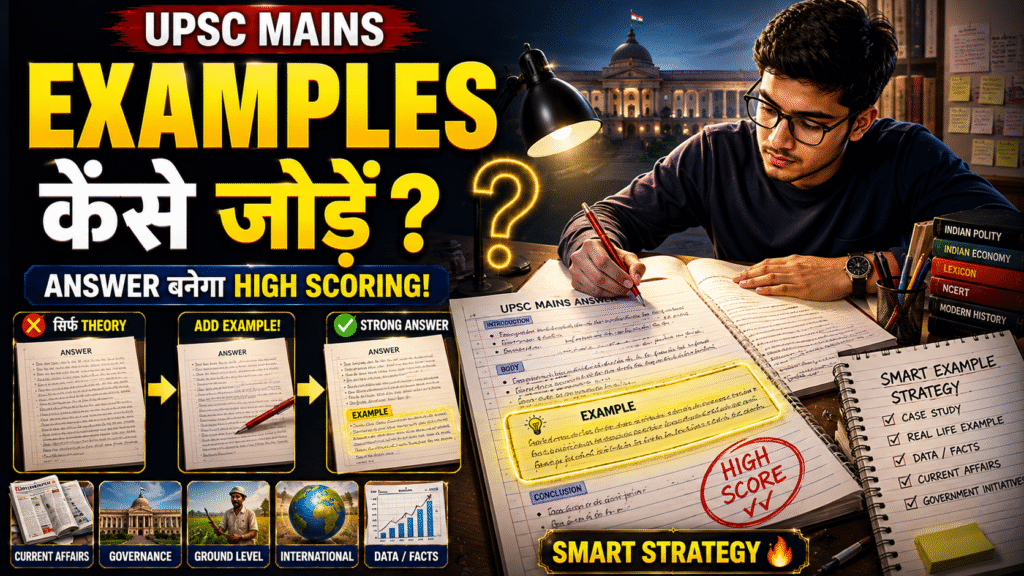
UPSC Mains Answer Writing में केवल Theory और Definitions लिखना पर्याप्त नहीं होता। अच्छे Examples आपके Answer को ज्यादा practical, relevant और impactful बनाते हैं। सही Example यह दिखाता है कि आपको Topic की केवल किताबों वाली जानकारी नहीं, बल्कि उसकी real-world understanding भी है।
लेकिन एक बात याद रखें—हर Answer में बहुत सारे Examples भर देना जरूरी नहीं है। Relevant Example + सही जगह पर इस्तेमाल करना ज्यादा important है।
Examples क्यों जरूरी हैं : UPSC Mains Answer में Examples कैसे जोड़ें….
Examples आपके Answer को:
ज्यादा Practical बनाते हैं।
Arguments को Support करते हैं।
Answer को Generic होने से बचाते हैं।
Current Affairs से जोड़ते हैं।
आपकी Analytical Understanding दिखाते हैं।
उदाहरण के लिए अगर प्रश्न है:
“Technology शासन को अधिक प्रभावी बना सकती है।”
केवल इतना लिखने के बजाय कि Technology से Governance बेहतर होती है, आप लिख सकते हैं:
उदाहरण: Digital platforms और online public services ने कई सरकारी सेवाओं तक नागरिकों की पहुंच Mains Answer को आसान बनाने में योगदान दिया है।
इससे आपका Point ज्यादा मजबूत दिखाई देता है।
Examples के कितने प्रकार हो सकते हैं ?
UPSC Mains में आप अलग-अलग प्रकार के Examples इस्तेमाल कर सकते हैं।
Current Affairs Examples
हाल की घटनाएं, Government Initiatives या सामाजिक मुद्दे।
Government Initiative Examples
किसी Policy, Scheme या Programme का उदाहरण।
Constitutional Examples
Articles, Supreme Court Judgments, Constitutional Values आदि।
4. Historical Examples
Freedom Movement, सामाजिक सुधार आंदोलन या Historical Personalities।
5. Administrative Examples
किसी District या प्रशासन द्वारा अपनाया गया innovative approach।
6. International Examples
दूसरे देशों की Best Practices।
7. Personal या Everyday Examples
विशेष रूप से Ethics और Essay में छोटे practical examples।
3. Example को Answer में कहां जोड़ें?
Examples को केवल अंत में अलग से नहीं लिखना चाहिए। उन्हें अपने Argument के साथ जोड़ें।
Simple Structure:
Point → Explanation → Example → Impact
उदाहरण:
Point: महिलाओं की आर्थिक भागीदारी Gender Equality को मजबूत कर सकती है।
Explanation: Financial Independence से महिलाओं की Decision-Making क्षमता और सामाजिक स्थिति बेहतर हो सकती है।
Example: Self-Help Groups और Women Entrepreneurship से जुड़े initiatives ग्रामीण महिलाओं को आर्थिक गतिविधियों से जोड़ने के प्रयासों का उदाहरण हैं।
Impact: इससे Inclusive Development को बढ़ावा मिल सकता है।
4. हर Point के बाद Example देना जरूरी नहीं है
यह एक common mistake है।
अगर आपके Answer में 6–7 Points हैं, तो हर Point के साथ अलग Example देने की जरूरत नहीं। आप:
- Introduction में 1 Example
- Body में 2–3 Relevant Examples
- Conclusion में 1 सकारात्मक Example या Initiative
का उपयोग कर सकते हैं।
Quality > Quantity
5. GS Paper के अनुसार Examples कैसे चुनें?
GS 1: History, Society और Geography
Examples:
- Social Reform Movements
- Women Empowerment
- Migration
- Urbanisation
- Climate Change
- Natural Disasters
उदाहरण:
Urbanisation की Challenges समझाते समय Mains Answer किसी बड़े शहर में Traffic, Housing या Waste Management जैसी समस्या का उदाहरण दिया जा सकता है।
GS 2: Polity, Governance और International Relations
Examples:
- Constitutional Provisions
- Supreme Court Judgments
- Government Schemes
- E-Governance
- International Cooperation
उदाहरण:
Digital Governance पर Answer में आप Online Public Service Delivery का Example जोड़ सकते हैं।
GS 3: Economy, Environment, Security और Technology
Examples:
- Renewable Energy
- Digital Economy
- Startups
- Disaster Management
- Cyber Security
- Agricultural Innovation
उदाहरण:
Renewable Energy के महत्व पर Solar Energy Projects या Green Energy Transition का Example इस्तेमाल किया जा सकता है।
GS 4: Ethics में Examples सबसे ज्यादा Powerful होते हैं
Ethics Answer में आप Examples का उपयोग कर सकते हैं:
- Personal Life से
- प्रशासनिक स्थितियों से
- Historical Personalities से
- समाज से
- किसी hypothetical situation से
उदाहरण:
Integrity समझाने के लिए:
जब कोई अधिकारी व्यक्तिगत लाभ के बजाय नियमों और Public Interest को प्राथमिकता देता है, Mains Answer तो यह Integrity का उदाहरण है।
6. एक “Example Bank” बनाएं
हर Subject के लिए अलग-अलग Examples जमा करें।
आपकी Notebook में Sections हो सकते हैं:
Governance Examples
Women Empowerment Examples
Environment Examples
Technology Examples
Social Justice Examples
Ethics Examples
International Relations Examples
जब भी Newspaper या Current Affairs में कोई अच्छा Case Study या Initiative मिले, उसे 2–3 Lines में Note करें।
धीरे-धीरे आपके पास एक मजबूत Example Bank तैयार हो जाएगा।
7. एक Example को कई Answers में इस्तेमाल करें
आपको हर Topic के लिए नया Example याद करने की जरूरत नहीं है।
एक अच्छा Example कई Dimensions में उपयोग हो सकता है।
उदाहरण के लिए कोई Digital Public Service Initiative इन Topics में इस्तेमाल किया जा सकता है:
- Governance
- Technology
- Inclusion
- Transparency
- Service Delivery
- Digital Divide
इसे Multi-Dimensional Example कहते हैं।
8. Examples को Facts की तरह गलत तरीके से न लिखें
अगर आपको किसी Scheme की exact details, Year या आंकड़े पूरी तरह याद नहीं हैं, Mains Answer तो गलत जानकारी लिखने से बचें।
ऐसे में General लेकिन Accurate तरीके से लिखें।
गलत तरीका:
किसी Scheme का गलत Year या गलत आंकड़ा लिख देना।
बेहतर तरीका:
✅ “भारत में Digital Public Infrastructure के विस्तार ने…”
Accuracy हमेशा ज्यादा महत्वपूर्ण है।
9. Introduction में Example कैसे इस्तेमाल करें ?
आप Introduction की शुरुआत किसी छोटे Real-Life Example से कर सकते हैं।
उदाहरण Question:
“Climate Change गरीब और कमजोर समुदायों को अधिक प्रभावित करता है।”
Introduction:
हाल के वर्षों में Heatwaves, Floods और Extreme Weather Events ने यह स्पष्ट किया है कि Climate Change केवल पर्यावरणीय नहीं, Mains Answer बल्कि सामाजिक और आर्थिक चुनौती भी है।
इसके बाद सीधे Answer की Demand पर जाएं।
10. Conclusion में Examples कैसे जोड़ें ?
Conclusion में Positive Example या Way Forward उपयोगी हो सकता है।
उदाहरण:
Community Participation, Technology और Effective Governance के माध्यम से कई विकास संबंधी Mains Answer चुनौतियों का समाधान अधिक Inclusive और Sustainable बनाया जा सकता है।
इस तरह Conclusion केवल Summary नहीं बल्कि Forward-Looking बनता है।
Examples याद रखने की आसान Technique
5-5-5 Rule अपनाएं
हर Major Theme के लिए :
5 Examples + 5 Facts/Data Points + 5 Keywords
तैयार करें।
जैसे Women Empowerment के लिए:
- 5 Government Initiatives
- 5 सामाजिक Examples
- 5 महत्वपूर्ण Keywords
इससे Exam के समय Content Recall करना आसान हो सकता है।
Daily Practice कैसे करें?
रोज Newspaper पढ़ते समय खुद से पूछें:
यह खबर किस GS Topic में इस्तेमाल हो सकती है?
उदाहरण:
कोई खबर Education से जुड़ी है।
इसे आप जोड़ सकते हैं:
- GS 2 → Education Policy
- GS 1 → Social Development
- Essay → Human Development
- Ethics → Equality और Social Responsibility
यही habit आपकी Answer Enrichment Skill को मजबूत करेगी।
UPSC Mains Answer का Example Formula
Point → Explain → Example → Analysis → Way Forward
उदाहरण:
Point: Technology Governance को अधिक transparent बना सकती है।
Explanation: Digital systems से Information Access और Service Delivery को बेहतर बनाया जा सकता है।
Example: विभिन्न Digital Public Service Platforms ने नागरिकों को सरकारी सेवाओं तक अधिक Mains Answer आसानी से पहुंचने में मदद की है।
Analysis: हालांकि Digital Divide, Cyber Security और Data Privacy जैसी चुनौतियों पर भी ध्यान देना आवश्यक है।
Way Forward: Digital Infrastructure के साथ Digital Literacy और मजबूत Data Protection Framework को बढ़ावा देना चाहिए।
Common Mistakes से बचें
हर Answer में बहुत ज्यादा Examples भरना।
Question से unrelated Example देना।
गलत Facts या Data लिखना।
केवल बड़े-बड़े नाम लिखकर आगे बढ़ जाना।
Example का Analysis न करना।
एक ही Example को हर Answer में Force करना।
Conclusion
UPSC Mains में Examples आपके Answer के ornaments नहीं, बल्कि evidence की तरह होने चाहिए। उनका उद्देश्य केवल Mains Answer को लंबा बनाना नहीं, Mains Answer बल्कि आपके Arguments को मजबूत बनाना है।